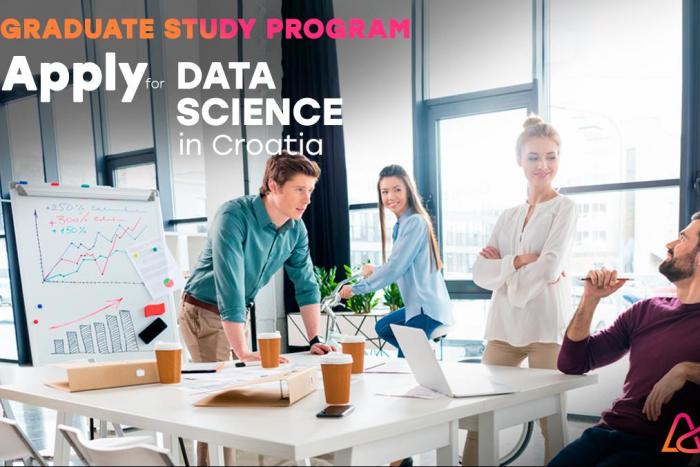
The Data science sub-specialization, endorsed by Algebra University College and promoted on Emagister, is one of four professional graduate programs in the field of applied computer engineering.
When you delve into the curriculum of this course, you will see that it encompasses the area of data analysis, social network analysis, affective computing, machine learning of statistics analysis, quantitative analytical methods, data visualization, and also fundamental business concepts suitable for graduate level.
Apart from the fundamentals, you will learn how to use those skills to create a “story” based on data (“data driven business”. Contextualizing based on data, also called “storytelling” is considered to be one of the most important skills today. It is recommended as a universal skill each of us should strive to perfect. Our society is based on stories that form the base for our way of communicating, living and dreaming.
If you are interested in learning more do not hesitate to contact Algebra University College through Emagister.co.uk.
Important information
Documents
Student lifestyle
Facilities
Location
Start date
Zagreb
(Croatia)
See map
Ilica 242, 10000, Zagreb - Croatia- Europe, 10000
Start date
On request
About this course
Upon receiving our diploma, you’ll become a true specialist for data science.
Admission to the specialized professional graduate study program is open to all applicants who have previously completed:
Undergraduate professional study program in the field of social, natural or technical sciences and acquired 180 or more ECTS credits.
Undergraduate university study program in the field of social, natural or technical sciences and acquired 180 or more ECTS credits.
Candidates missing knowledge and passed courses in required fields from the bachelor study level will have opportunity to attend preparation module to be able to successfully study on master level program.
All candidates who have completed an undergraduate study program.
Professional Master of Computer Engineering with sub-specialization in Data Science
This is an inter-disciplinary field, which the industry calls the ‘Fourth Paradigm’ of science. You’ll learn how to analyze and process large amounts of data and to extrapolate information required for sound business operations.
Should you be needing any additional information, our International Office is at your disposal.
Questions & Answers
Add your question
Our advisors and other users will be able to reply to you
We are verifying your question adjusts to our publishing rules. According to your answers, we noticed you might not be elegible to enroll into this course, possibly because of: qualification requirements, location or others. It is important you consult this with the Centre.
Thank you!
We are reviewing your question. We will publish it shortly.
Or do you prefer the center to contact you?
Reviews
Have you taken this course? Share your opinion
This centre's achievements
2021
All courses are up to date
The average rating is higher than 3.7
More than 50 reviews in the last 12 months
This centre has featured on Emagister for 5 years
Subjects
Computing
IT
Network
Systems
Engineering
Network Training
Computer
Learning
Analysis
Science
Social
Data
Machine
Affective
Database
Data Management
Information
IT Management
Engineering Skills
Data analysis
Teachers and trainers (1)
Leo Mršić
Head of Applied Computer Engineering study program in Data Science
Course programme
Learning Outcomes of the Study Program GENERAL LEARNING OUTCOMES: Evaluate and analyze complex and insufficiently defined problems in the field of occupation using concepts of information theory, applied mathematical theory and best engineering practices Introduce innovative solutions in the field of applied computing by critical analysis and evaluation of current knowledge, models and solutions in the field of expertise, using “best practice solutions” and familiar and modified problem scenarios Apply complex research and analysis methods to determine detailed user or organizational requirements for information solutions or systems Identify, analyze and explain the problems of applying, polishing and implementing existing information systems in a wider business context and propose adequate solutions Manage relationship with users and / or members of a team, recognizing possible sources of misunderstanding and conflict and proactively and effectively influence their inhibition Design , prepare and manage the implementation of development projects in the field of applied computing using recognized methodologies and taking into account available resources, budgets and risks Be aware of business, organizational and sociological aspects of application and impact on the environment (user, organization, society) when planning, designing and applying information systems Evaluate the entrepreneurial idea and propose adequate business and organizational conditions for its realization Proactively manage your own professional and personal development and collect new knowledge and skills in different contexts and environment (e.g. through successful and unsuccessful projects, through continuous self-learning and monitoring of scientific and technological achievements, additional education …) Independently design and manage IT project with available resources, taking responsibility for personal and team tasks in unpredictable business conditions and environment Perform an independently significant final project by following set of requirements and standards and by applying modern technologies, tools and methodology PROFESSIONAL LEARNING OUTCOMES – Data orientation Critically evaluate the impact of disruptive technologies on business environment, evaluate the impact of various disruptive technologies within the sector in which they emerged and analyze the potential for new disruptive technology Choose appropriate methods to work with missing data and data transformation, recommend solutions to identified problems when preparing data and choose adequate solution for a problem in the process of integration, normalization and data discretization Create a program solution that solves part of the data problem Assess the impact of different types of security risks and analyze the provisions of the code of ethics that protect the right to privacy and explain conceptual difficulties in determining the right to privacy Assess the impact of different types of reduction of features and apply the appropriate basic methods of reduction of features and samples and choose appropriate machine and in-depth learning algorithms to address the observed business problem Identify, interpret and determine the basic measures of central tendency and dispersion in terms of applicability, interpretability and usefulness and interpret the basic aspects of correlation and regression analysis Explain social network analysis and what are its goals; recommend basic network, centrality, prestige, and network grouping, and rank basic functionalities of social network analysis software 46. Analyze the advantages and disadvantages of the cloud analytics; choose the adequate cloud services and apply them to solve a specific business problem Analyze features of psychophysical, voice, verbal and facial expressions in the context of model development for automated recognition of affective states in industries Review potentials of large data sets and techniques for analyzing large data sets and evaluate product quality using relevant knowledge Evaluate the role and benefits of visualization of data in relation to numerical representation and choose the appropriate types of visualization tools and explorative analysis for a given problem
See related categories
Data Management Postgraduate Degrees
Data analysis Postgraduate Degrees
Other IT Postgraduate Degrees
Distance learning Other IT Postgraduate Degrees
Algebra University College Postgraduate Degrees
Data Science
£ 5,198.05 VAT exempt
*Indicative price
Original amount in EUR:
6,124 €
Add similar courses and compare them to help you choose.
{title}
{rating}
{centerName}
{attributes}
{price}{priceBeforeDiscount}{taxCaption}
{options}
Training by subject
Postgraduate Degrees of Business and Management Postgraduate Degrees of Design and Media Postgraduate Degrees of Finance Postgraduate Degrees of Health Postgraduate Degrees of Humanities, Social Science, Education Postgraduate Degrees of Industry and Science Postgraduate Degrees of IT, Computing, Telecommunications Postgraduate Degrees of Languages Postgraduate Degrees of Law and Defence Postgraduate Degrees of Sales and Marketing Postgraduate Degrees of Sports and Leisure Postgraduate Degrees of Tourism and Hospitality